![]() |
||||
|
“
”
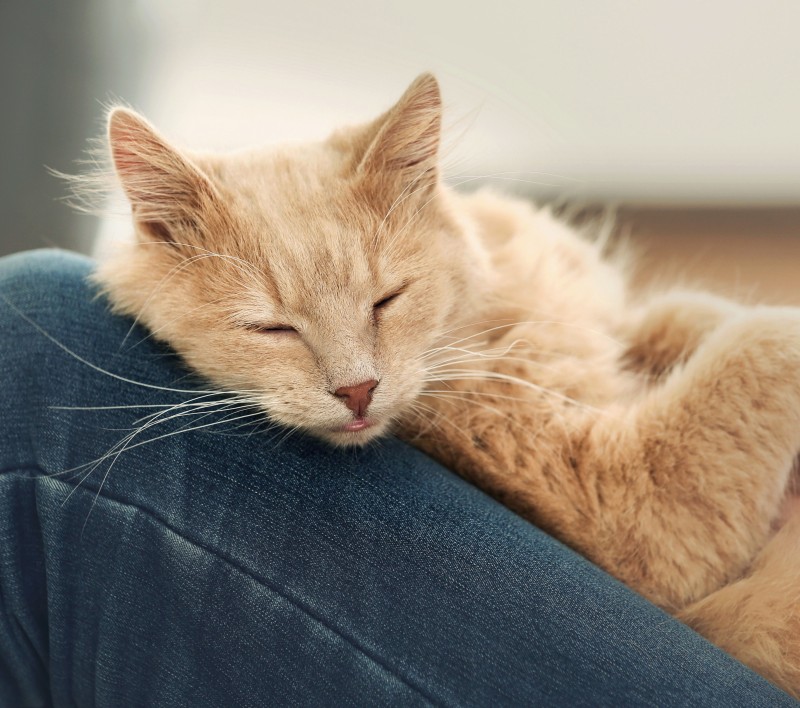
We were first time clients of the Michigan Avenue Animal Hospital when we brought in a stray kitten we found outside our apartment. She was extremely timid and had what we thought to be an infected abscess on her cheek, but Dr.Dhaliwal and staff were very gentle and loving with her and took great care in treating what turned out to be a larvae that burrowed into her skin.
She is in much better spirits since her visit and is quickly becoming a very affectionate and grateful kitty. I would like to personally recommend this facility to anyone looking for genuine, quality medical/emotional attention for their pets.
Aug 03, 2011
|
Tibial Plateau Leveling Osteotomy (TPLO)
Tibial plateau leveling osteotomy (TPLO) is an increasingly popular method for treatment of anterior cruciate ligament injury in dogs. Anterior Cruciate Ligament (ACL) ruptures,
The cranial cruciate ligament (ACL) is one of the main stabilizing structures of the stifle joint ( knee joint). The ACL's function in the dog is to prevent the femur bone from sliding backwards down the slope of the top of the tibial bone (Shin bone). TPLO surgery was invented by a brilliant veterinarian named Barclay Slocum. Dr. Slocum's genius was in showing that if the top of the tibia is not sloped, the dog does not need an ACL. He was the first to describe the "anterior tibial thrust" which occurs every time the dog's leg comes down. The tibia attempts to push forward, but is held in place by the normal ACL, just like a wagon is held on a hill by a rope. This instability results in lameness (limping) and osteoarthritis. Rather than reconstructing the ACL, which is ineffective, the goal of TPLO is to eliminate this instability by changing the biomechanics of the stifle joint. The anatomy of the canine stifle joint is similar in many ways to the human knee joint. But, people don't have an anterior tibial thrust. Our tibia has about a 6 degree angle to the "plateau" of the tibia. People need an ACL for all the diverse movements they do in sports. Dogs do not need an ACL if the top of the tibia is at 6 degrees. Dogs do not do the twisting that people do and don't need the stability of the ACL in the same way that people do. During this Surgery, the orthopedic surgeon performs an osteotomy (cut in the bone) on the tibia with a curved saw blade and rotates the fragment closest to the joint with relation to the rest of the tibia. The distance of this rotation is based on calculations the surgeon performs before the operation. The surgeon compresses the two resulting pieces of the bones and fixes the tibia in its new orientation with a plate and screws; both are made of surgical grade stainless steel. There are different kinds of bone plate and screws are used to repair. We use TPLO locking plate & Screws from Synthes (www.synthes.com).
TPLO is widely accepted to give the best functional outcome and has enabled working/performance animals to return to high functional standards. There is a trend to a slower progression of arthritis following TPLO surgery, versus dogs that received the MRIT (modified retinacular imbrications technique). however arthritis usually will develop regardless of technique.
24 Hr Post TPLO Surgery Video Post-operative risks associated with this operation and patients’ recovery include: delayed or abnormal healing, breaking and/or loosening of the plate and/or screws, and infection. To minimize the risk of complications while the tibia is healing, we recommend that TPLO patients be kept in a crate (cage) at all times until radiographs (X-ray images) are taken, usually at eight weeks after the operation. Bone healing may take up to 16 weeks in some patients. Rehabilitation exercises are performed at home during this recovery period and may be continued at the Animal Rehabilitation Center. Choosing a Veterinary Surgeon Dr. Dhaliwal is available for TPLO consultation, second opinions, or referrals for the TPLO surgery procedure. Slocum® Post-operative Care for Orthopedic SurgeryFor eight to twelve weeks following surgery, a strict confinement regime is required with three important principles. 1. Your pet can be inside, on carpeted surfaces, under your direct supervision. It can wander around the room at a slow walk as long as it is not constant. Running, jumping, bounding, playing, etc., are not allowed. 2. Your pet must be on a leash at all times when outside for airing and going to the bathroom. If the animal has to cross slick floors or uneven ground, you need to use a "belly-band" in case it slips or stumbles. The "belly-band" is not used for support but rather as a safety net to protect your pet. Your pet is not allowed to be off lead when outside or to go for an actual walk. 3. When not under your direct supervision, your pet is to be confined in an airline kennel or equivalent. General Information:a. Playing with other animals is not allowed during confinement. If there are other pets in your household, you will need to keep them separated. b. During confinement, your pet's food intake needs to be reduced to help prevent weight gain. Most dogs will maintain their current weight if their food intake is cut in half. Water consumption should remain normal. c. The first two weeks following surgery you will need to monitor your pet's incisions. Licking or chewing can cause infection or sutures to loosen. If you notice that your pet has started licking, you will need to take steps to discourage it from doing so. d. It takes a minimum of six to eight weeks for bones to heal. e. One of the most difficult aspects of confinement is that the animals will frequently feel better long before they are healed. At this point your pet will start being more careless of the operated limb and is then more likely to be overactive and injure itself. Until the bone is healed, you must adhere strictly to the confinement guidelines and not allow your pet to do more. f. If your pet is jumping or bouncing in its confined area, it is being too active. Tranquilizers may be required to help alleviate your pet's anxiety or control its activity. g. If at any time during your pets recovery and healing it does anything that causes it to cry out or give a sharp yelp, contact your veterinarian. h. Following surgery your pet should always maintain at it's current level of function, or improve. If at any time during your pet's recovery and healing it has a set back or decrease in function, contact your veterinarian. I. It is imperative that you inform your veterinarian at once if your pet does something that is potentially harmful to the surgery. If something has occurred which jeopardizes the outcome of surgery, it is usually less difficult to correct if it is caught right away, which leads to a better outcome for your pet. j. If your pet is too active during it's confinement it may injure itself or slow healing which increases the amount of time your pet must be confined. k. Follow up appointments are usually needed two weeks post-operatively to monitor incisions and healing. At eight weeks post-operatively radiographs are taken at which time your pet is started on a regulated activity regime. A final appointment at four months post-operatively is needed for additional radiographs and final instructions before returning your pet to normal activity. Slocum® Rehabilitation Regime:
|
“
”
Dear Dr. Dhaliwal and Staff,
I wanted to let you know how much Zoe and I appreciate your dedication and good care! Zoe is doing excellent after Luxating Patella Surgery.
We will continue our visits, as we have for the past 7 years, from our new home in Brooklyn, Mi., as I trust in your care explicitly!
Thank You so much!
Cindy and Zoe Houston
“
”
Ruth' TestimonialsDr. Dhaliwal and his staff at Michigan Avenue Animal Hospital have taken exemplary care of our family's pets for several years. We have been extremely pleased with the quality of care provided. His loving and understanding way makes us feel we have found the best veterinarian - and a new friend.
|
||
|
|
||||
|
Home · Contact Us · About Us · Services · Surgeries · Emergencies · Boarding · Grooming · Info · Links · FAQs · Testimonials · Disclaimer · Search · Site Map
mianimalhospital@gmail.com |
||||